
 PDF Download
 PubReader
 Export Citation
 Email the Author
 Share Facebook
 Share Twitter
 Metrics (View:789)






The Indonesian trilemma: Balancing development and conservation
Indonesia faces a rapidly intensifying development paradox. With its population projected to approach 290 million by 2025 (BPS, 2025), annual demand for both food and energy is expected to surge by 5-6% (Bagaskara et al., 2024).
Historically, meeting such demands has often led to the expansion of agriculture and extractive industries into natural forests, which if occurring now would undermine decades of climate and biodiversity commitments.
The current administration’s stated policy priorities include utilizing over 20 million hectares of state forest land for food and energy production (Agustine, 2025) and simultaneously restoring about 10.3 million ha of degraded land, which includes 2 million ha of degraded peatland by 2030 (Government of Indonesia, 2025).
If these dual goals are executed through conventional, monocultural expansion ― particularly within protected forest areas ― they pose risk of escalating deforestation and carbon emissions (Isaac, 2025; Agustine, 2025). Environmental groups have warned that allowing cultivation in protected forests could undermine the progress Indonesia has made in forest conservation and climate mitigation.
In late October 2025, Indonesia formally submitted its Second Nationally Determined Contribution (SNDC) to the UNFCCC, marking a significant shift in the country’s climate policy architecture. The SNDC moves from percentage-based mitigation pledges to absolute emissions targets, committing Indonesia to peak national emissions at approximately 1.34-1.49 GtCO2e by 2030, equivalent to 8-17% below projected business-as-usual levels. The SNDC is fully embedded within Indonesia’s national development framework, including the RPJMN 2025-2029 and the long-term RPJPN 2025-2045, and aligns with the national Low Carbon and Climate Resilience Strategy (LTS-LCCR) targeting net-zero emissions by 2060. Forestry and Other Land Use (FOLU) remains central to this strategy, alongside accelerated deployment of renewable energy and strengthened adaptation measures. This transition to absolute emissions ceilings significantly raises the stakes for land-use decisions, reinforcing the urgency of development pathways that expand food and energy production without eroding the FOLU carbon sink or triggering new forest conversion.
Our perspective asserts that the solution lies not in making trade-offs between economic growth and forest protection but in a radical shift in land-use strategy. Against this backdrop of competing demands, Indonesia’s vast degraded and underutilized lands present a transformative opportunity. Rather than viewing these areas as ecological liabilities, they can become the foundation of a new development pathway that boosts food and energy production while strengthening climate and biodiversity outcomes. Redirecting investment and planning towards these landscapes enables Indonesia to meet its national security goals without compromising natural forests and unlocks a long-overlooked resource base capable of driving restoration, productivity and rural prosperity. It is within this strategic reorientation that the country’s degraded lands emerge not as constraints but as the cornerstone of a forest-positive bioeconomy.
The Huge Opportunity of Degraded and Underutilized Lands
Indonesia possesses an immense, largely untapped, resource for this transformation: in 2022, Indonesia reported an estimated 26 to 33 million hectares of degraded land (UNCCD, 2022; Republic of Indonesia, 2022). Three years later in 2025, the Ministry of Forestry stated that out of Indonesia’s 120.6 million hectares of forest, there are 7.4 million hectares of critical land within State Forest (Table 1). In addition, there are 5.3 million hectares of critical land located outside forest areas that are suitable for rehabilitation. Meanwhile, the Ministry of Agriculture noted an additional 10-15 million hectares of marginal land available for productive use (Ritung et al., 2015), bringing the total to 22.7 to 27.7 million hectares.
| Category | Source | Estimated area (million ha) | Notes |
|---|---|---|---|
| Degraded forest land | Ministry of Forestry (MoF) (2025) | 7.4 | Critical land within State Forest |
| Degraded non-forest land | Ministry of Forestry (2025) | 5.3 | Critical land outside State Forest suitable for rehabilitation |
| Marginal agricultural land | Ministry of Agriculture (MoA) (Ritung et al., 2015) | 10-15 | Low productivity, biophysically stressed agricultural land |
| UNCCD degraded land estimate | UNCCD Data Dashboard (2022) | 26-33 | Broad national estimate using global degradation methodology (not directly additive with MoF/MoE/MoA categories) |
These degraded lands include vast tracts of low-productivity drylands, previously burned peatlands and former mining concessions. These areas currently yield minimum ecological services or socioeconomic benefits yet hold the key to achieving the nation’s restoration and renewable energy targets.
Restoration of these lands offers a multifunctional pathway.
-
Ecological improvement: Enhancing soil fertility, stabilizing water cycles and increasing biodiversity.
-
Economic yield: Providing local energy supplies, staple food crops and diverse income streams.
-
Climate mitigation: Achieving significant carbon sequestration through biomass and soil carbon enrichment.
The strategy of sustainable intensification of landscapes ― integrating perennial tree crops, annual food crops and bioenergy species in mixed agroforestry systems ― is crucial. This approach maximizes output per hectare while simultaneously restoring ecological functions, providing a robust, low-risk alternative to forest encroachment.
Having established the scale of degraded land available, the critical question becomes: How can this resource be mobilized to achieve food and energy security without forest conversion?
Decoupling Food and Energy Needs from Deforestation
Indonesia’s SNDC explicitly recognises the utilisation of degraded land for renewable energy as a national priority under its Economic Resilience agenda. The nexus between food, energy and climate security was central to Indonesia’s commitments under its Enhanced Nationally Determined Contribution (Republic of Indonesia, 2022), which targets emissions reductions of up to 43.2% by 2030. The forest and land use (FOLU) and energy sectors account for 97% of the national mitigation potential. Therefore, any policy that risks the FOLU sink must be urgently reconsidered.
Climate-smart agroforestry (CSAF) offers a practical framework to decouple food and energy production from deforestation (Octavia et al., 2022). It integrates trees, crops and, where appropriate, livestock, following the principle of planting the right tree in the right place for the right purpose. By combining bioenergy species with food and fodder crops specifically on degraded or low-productivity lands, CSAF avoids competition with prime agricultural areas and reduces pressure on natural forests.
CSAF extends agroforestry’s role of delivering multiple, simultaneous benefits ― timber and non-timber forest products, food, energy and improved environmental functions ― by adding measurable climate gains (Octavia et al., 2022; Figure 1). The CSAF framework outlined above is not theoretical; extensive field trials across Indonesia’s diverse ecosystems demonstrate its practical viability.
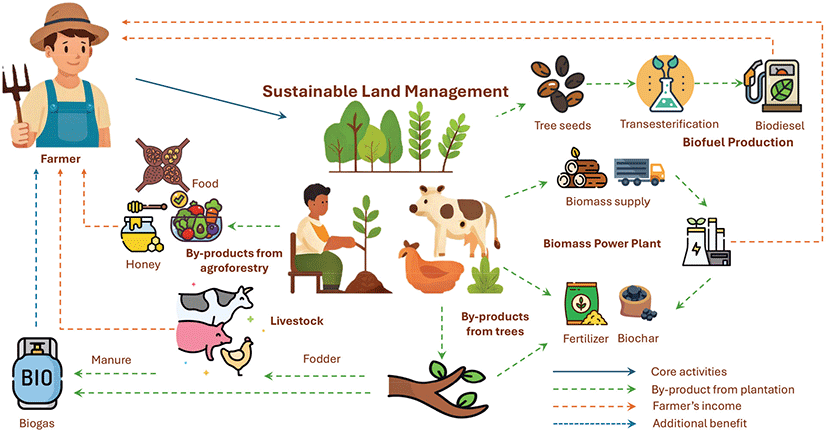
In Indonesia, CSAF models are adapted to varying biophysical conditions and forest classifications, specifically designed to meet climate mitigation and adaptation requirements simultaneously.
On flat to moderately sloping land, CSAF can be oriented towards the production of timber, non-timber products and environmental services. Food-focused agroforestry systems are applied in sparsely vegetated areas, integrating multi-purpose tree species with shade-tolerant staples, such as upland rice, maize, tubers, legumes and breadfruit, as well as energy crops, such as Calophyllum inophyllum. Fodder species are selected according to local livestock needs.
On moderate to steep terrain, CSAF prioritises soil, water and microclimate regulation, adhering strictly to soil and water conservation principles and maintaining landscape stability. Species' composition and management practices are designed to enhance ecosystem resilience rather than alter the landscape structure.
In production forests, species’ selection may target both timber and non-timber products; in protection forests the emphasis shifts to non-timber commodities; and in conservation areas CSAF is applied only in limited zones ― such as degraded enclaves or traditional-use areas ― using native species to maintain biodiversity and ecosystem integrity (Ministry of Forestry, 2025).
These distinctions ensure that CSAF strengthens the ecological function of each forest category rather than compromising it.
Further, CIFOR-ICRAF research demonstrates that bioenergy-based agroforestry systems established under CSAF principles can generate substantial renewable energy yields while also sequestering carbon and avoiding emissions, thereby, reinforcing Indonesia’s climate and energy security goals (Baral et al., 2022; 2023).
Maximizing Productivity: Models and Case Studies
Effective restoration depends on adopting site-specific, mixed-species models that yield continuous, diverse benefits.
C. inophyllum (‘nyamplung’ or ‘tamanu’ in Indonesian) is highly adaptable, thriving on degraded mineral soils including ex-burned areas. Initial results indicate it is also adaptable in degraded peatlands although further investigation is warranted. Its primary value lies in its high-oil content seeds, ideal for biofuel, alongside secondary yields like high-quality timber and honey. In Wonogiri, Central Java, CSAF systems incorporating C. inophyllum alongside short-cycle intercrops like rice, maize and legumes generated significantly higher net present values ― up to IDR 940 million (≈ KRW 84,800,000 or USD 59,500, converted using 10-year composite rate (2015-2024) based on FRED annual averages for USD/IDR and USD/KRW) per hectare ― compared to monocultures (Rahman et al., 2022).
Building on these dryland systems, a second group of high-oil species demonstrates how energy-oriented agroforestry can further expand restoration potential in similarly challenging environments.
P. pinnata (‘malapari’ in Indonesian) and R. trisperma (‘kemiri sunan’ in Indonesian) are emerging as globally significant bioenergy sources. These hardy trees are suitable for challenging environments, including degraded drylands and mine reclamation sites. P. pinnata seeds, containing up to 40% oil, are being actively trialled in a collaboration between US-based agricultural innovation company Terviva, and Japanese integrated energy company Idemitsu Kosan for the production of biofuel including sustainable aviation fuel (SAF), demonstrating a viable, non-food-competing pathway to energy security (Hussain, 2025a; 2025b). R. trisperma offers similar high-oil yields and acts as a natural pest deterrent (Riayatsyah et al., 2017). While these bioenergy species offer strong energy yields, other dryland models prioritise soil rehabilitation and diversified rural incomes, particularly on erosion-prone or sloping lands.
Indonesia’s extensive drylands (over 140 million hectares) are prime candidates for integrated agroforestry. Combining fast-growing, soil-improving species like Gliricidia sepium (‘gamal’ in Indonesian) with commercial crops, such as coffee and cacao, or multi-use species like bamboo, controls erosion and improves soil organic matter (Kusumah et al., 2019; Susanto et al., 2024). Bamboo, in particular, offers rapid biomass for biochar and pellets, construction material and edible shoots, providing immediate and long-term income streams.
While drylands require soil rebuilding, Indonesia’s peat landscapes demand an entirely different approach centred on water management and ecological compatibility.
The restoration of degraded peatlands requires specialized approaches, such as paludiculture i.e. the sustainable cultivation of crops on wet or rewetted peatlands. In South Sumatra, integrated systems combining C. inophyllum and Dyera lowii with rice, pineapple and local fish species within re-wetted peatland environments have been shown to support significantly increased rice yields (1.2 to 3.7 tonnes per hectare) while ensuring optimal profit, demonstrating the potential for multifunctional systems to sustain livelihoods and biodiversity on fragile landscapes (Pusvita et al., 2024; Finlayson, 2021).
Additionally, other types of models for peat and wetlands are important to mention: 1) rewetting with natural regeneration; 2) revegetation/assisted natural regeneration focused on native wetland species; and 3) community-based fire prevention and livelihood models centered on restoration.
Beyond peatlands, large tracts of degraded forest areas offer opportunities for models that blend conservation objectives with livelihood resilience.
In Sumatra and Kalimantan, many smallholders utilize rubber-based agroforestry systems, effectively moving beyond monocultures. They incorporate high-value timber species like indigenous ‘meranti’ (Shorea spp) and local fruit trees (e.g. durian) alongside the primary rubber (Hevea brasiliensis) crop. This diversification enhances biodiversity and critical ecosystem services, reducing soil erosion and increasing carbon stocks (Mathieu et al., 2025; Budiastuti et al., 2022). The system provides a crucial safety net: fruit trees offer immediate food and income; the rubber sap provides consistent medium-term earnings; and the timber acts as a long-term asset or ‘savings account’. By blending food, non-timber forest products and timber production, this robust, multi-strata model ensures better resilience against price volatility, pests and climate shocks, sustaining livelihoods across millions of hectares of Indonesia’s forested landscapes.
A similar logic of integrated, multi-strata design underpins Indonesia’s high-value coffee and cacao landscapes, where agroforestry improves both yield and ecological stability.
In regions like Lampung in Sumatra and parts of Sulawesi, smallholders successfully implement multi-strata agroforestry systems focused on high-value cash crops such as coffee (Coffea robusta/arabica) and cacao (Theobroma cacao). These models integrate multiple shade layers using fast-growing, beneficial trees, such as the nitrogen-fixing Gliricidia sepium and local timber or fruit species. The strategic shade improves the microclimate, which is essential for producing higher-quality coffee and cacao beans (often resulting in premium prices) and significantly reduces the incidence of major pests like the cocoa pod borer. Studies have shown these diversified systems yield overall higher net returns and better conservation outcomes than monocultures (Arellanos et al., 2025; Kristanto et al. 2025; Konate et al., 2024; Niguse et al., 2022; Niether et al., 2020). By incorporating short-term crops and long-term timber species, these systems optimize land-use efficiency, effectively diversify income streams and contribute to climate change mitigation through enhanced soil carbon sequestration.
Taken together, these ecosystem-specific models demonstrate that restoration-oriented, mixed-species agroforestry can outperform monocultures across Indonesia’s diverse landscapes, forming the practical basis for a forest-positive bioeconomy.
Quantifying Food and Energy Potential
The potential of using degraded lands for simultaneous food and energy production is substantial.
Estimates suggest that utilizing 3.5 million hectares of severely degraded land for bioenergy crops could substantially contribute to Indonesia’s goal of achieving a 23% renewable energy mix by 2025.
Based on Jaung et al. (2018) energy-yield ranges (0.2-24 t biomass ha−1 yr−1, 0.1-9 t bio-oil ha−1 yr−1, equivalent to 2-444 GJ ha−1 yr−1: If 3.5 million ha of severely degraded lands were planted with mixed C. inophyllum, P. pinnata and R. trisperma systems, annual energy yield would range 7-1300 PJ, which is equivalent to 8-15% of Indonesia’s projected 2030 renewable energy supply, sufficient to supply 25-40% of domestic biodiesel. This directly supports national targets for a 23% renewable energy mix.
Such a decentralization of bioenergy production reduces reliance on imported fossil fuels and creates rural employment.
CSAF systems typically produce multiple food outputs per hectare ― cereals, legumes, roots and tubers, vegetables, fruits and fodder supporting animal protein ― and repeatedly show higher total food-energy production per unit area than monocultures. A global meta-analysis found that diversified agroforestry systems can provide 20-60% higher total caloric productivity than comparable single-crop systems because multiple strata and crop types produce food throughout the year (Muchane et al., 2020; Waldron et al., 2017). Annual food-energy production in well-designed tropical agroforestry commonly ranges from 6-10 million kilocalories per hectare per year, depending on crop mix, climate and management (Jamnadass et al. 2020; Jung and Vendrametto, 2025). Scaled to 5 million ha of CSAF, this equates to staple food supply for 40-60 million people annually, based on Indonesian dietary carbohydrate averages.
This diversified cropping strategy buffers farmers against market volatility and climate shocks, providing enhanced food and nutritional security and reinforcing circular bioeconomy principles wherein by-products (press cake, biomass) are recycled for feed and fertilizer.
Labour intensities for CSAF are derived from international restoration and agroforestry employment benchmarks, which typically range 0.003-0.050 FTE per ha for agroforestry models in Central Asia (Agostini et al., 2023) to 0.1-0.42 jobs per ha for forest landscape restoration and agroforestry systems in Latin America and Brazil (Brancalion et al., 2022; Nature4Climate, 2025; Orbitas, 2025). Modelling for Indonesia’s Brantas River Basin further assumes 0.25-0.375 FTE per ha for diversified agroforestry systems (Bassi et al., 2021). Against these benchmarks, our CSAF estimates of 35-50 FTE per 1000 ha in the establishment phase and 15-25 FTE per 1000 ha in steady-state operations are conservative.
Scaling these benchmark labour intensities to 5 million ha of CSAF is consistent with national-level restoration employment modelling by ILO-WWF (Lieuw-Kie-Song and Pérez-Cirera, 2020), Instituto Escolhas (2023), United Nations Environment Programme (2022) and IUCN (Raes et al., 2021), which show that large-scale FLR generates hundreds of thousands of rural jobs, particularly in early establishment phases. We therefore conservatively estimate that scaling to 5 million ha would generate 175,000-250,000 jobs in the initial phase and 75,000-125,000 long-term rural jobs.
While the potential of CSAF and bioenergy-based restoration on degraded lands is substantial, successful implementation requires confronting several structural, institutional and market-related challenges. Recognising these constraints is essential for designing realistic policies and investment strategies.
1) Land tenure and clarity of rights: Unclear or contested land tenure remains one of the most significant barriers to large-scale restoration. Many degraded areas fall within overlapping administrative claims, or are situated in zones where communities lack formal recognition of management rights. Risk mitigation: Strengthening and expanding Social Forestry mechanisms, accelerating participatory mapping and ensuring transparent delineation of eligible degraded lands can reduce conflict and enhance long-term investment security.
2) Market development for bio-based products: The commercial viability of CSAF systems depends on predictable markets for bioenergy feedstocks, timber, non-timber products and high-value crops. In many regions, value chains remain fragmented, and price volatility can undermine farmer confidence. Risk mitigation: Developing regional processing hubs, securing off-take agreements and supporting the emergence of domestic SAF, biofuel and biochar industries can stabilise markets and incentivise adoption.
3) Technical capacity and extension services: CSAF models are inherently more complex than monocultures, involving multi-species design, soil and water management and adaptive silviculture. Limited extension capacity, especially in remote or under-resourced districts, risks inconsistent implementation. Risk mitigation: Investing in capacity-building for local governments, extension officers and community groups and ensuring co-development of site-specific models with research institutions, can raise technical competence and reduce establishment failure.
4) Monitoring, reporting and verification (MRV): To access carbon revenue and track ecological and livelihood outcomes, robust MRV systems are essential. However, existing MRV frameworks are often costly, technically demanding and insufficiently integrated with community-based monitoring practices. Risk mitigation: Leveraging simplified, tiered MRV approaches, integrating digital tools and enabling community participation can lower costs, increase transparency and ensure that benefits flow back to local stewards.
Policy, Economic Viability and Innovative Financing
Annex 2 of the SNDC identifies a dedicated programme on the integration of degraded land rehabilitation with biomass energy development, supported by two core actions: the rehabilitation of degraded lands using species suitable for energy production and targeted research and development to underpin sustainable biomass energy plantations and downstream bioenergy industries. This programme is classified under the priority fields of energy and ecosystems and is explicitly designed to generate co-benefits for mitigation in the Agriculture, Forestry and Other Land Use (AFOLU) sector while contributing to the implementation of the United Nations Convention to Combat Desertification. This formal policy recognition provides a clear mandate for climate-smart, bioenergy-based agroforestry systems on degraded lands, positioning CSAF not as an ancillary intervention but as a core instrument for delivering Indonesia’s climate, energy and land restoration objectives.
-
Subsidies or input-support schemes for early-phase CSAF establishment (e.g. seedlings, soil amendments, water management), focused on communities and cooperatives with Social Forestry permits.
-
Tax incentives for companies investing in bioenergy processing, SAF feedstock development and CSAF value chains, including accelerated depreciation for processing facilities.
-
Performance-based payments for verified carbon sequestration or avoided emissions through a strengthened Badan Pengelola Dana Lingkungan Hidup (BPDLH/Environmental Management Fund) carbon-financing window.
-
Price stabilisation mechanisms for C. inophyllum, P. pinnata and R. trisperma seed oil and bamboo biomass to reduce farmer exposure to market volatility.
-
Indonesia also receives international support through multilateral channels (such as GEF, FCPF Readiness Fund, FIP, UNREDD, FCPF Carbon Fund, BioCarbon Fund, GCF and other financial institutions) and bilateral channels (Government of Indonesia, 2025).
-
Clear land-use zoning for degraded land allocation, harmonised across MoF, MoE, MoA and MoEMR, with transparent eligibility criteria for CSAF deployment.
-
National CSAF standards defining minimum species diversity, soil and water conservation practices and MRV protocols.
-
Mandatory integration of CSAF options in provincial land rehabilitation plans and bioenergy development blueprints.
-
Fast-track permitting for CSAF enterprises operating within Social Forestry areas or designated degraded-land clusters.
-
Integrated landscape governance: Aligning land-use planning across all relevant ministries to clearly define degraded lands suitable for CSAF thereby eliminating conflicts and overlaps.
-
Tenure security: Expanding the Social Forestry (Perhutanan Sosial) framework to ensure secure tenure and clear benefit-sharing rights to local communities, empowering them as the primary stewards of restored lands.
-
Incentive mechanisms: Developing robust Payment for Ecosystem Services (PES) schemes and facilitating access to carbon revenue streams.
-
Science-based implementation: Mandating the adoption of mixed-species, site-specific CSAF technologies over simple monocultures.
-
MRV: Strengthening MRV systems to accurately track and reward carbon sequestration, biodiversity gains and social equity outcomes.
These policy steps are fundamental to ensuring that restoration-based food and energy systems effectively contribute to the national Low Carbon Development Initiative and the UN Sustainable Development Goals (2, 7, 13, 15).
Carbon and biodiversity credit markets are emerging complementary mechanisms for monetising verified ecological improvements. Climate-smart agroforestry on degraded tropical land can sequester approximately 5-10 tCO2e ha−1 yr−1 in biomass and soils, which is well within reported ranges for afforestation, reforestation and agroforestry systems in the tropics (Nabuurs et al., 2022; Basuki et al., 2022; Abebaw et al., 2025). Recent methodological developments now show that such agroforestry-based restoration can be structured to generate both carbon and biodiversity credits, demonstrated by smallholder corridor restoration initiatives in Africa (Common Fund for Commodities, 2025) and by biodiversity-credit methodologies developed for agroforestry systems in Latin America (Sarmiento et al., 2022; Colombo, 2024; Yale University, 2024). Combining these credits creates a more diversified and resilient revenue base for communities and investors, reducing over-reliance on carbon pricing. To participate effectively, MoE would need to establish national biodiversity credit standards aligned with global frameworks and incorporate CSAF-specific indicators tailored to restoration landscapes.
New nature-positive financial products ― e.g. restoration bonds, sustainability-linked loans, green securitisation facilities and nature performance bonds ― can mobilise private capital for CSAF at scale. Potential mechanisms include CSAF-linked landscape bonds issued by provincial governments or BPDLH with returns tied to verified carbon and biodiversity outcomes; sustainability-linked credit lines for bioenergy processors (SAF, biodiesel, bamboo biochar) with interest rate reductions based on CSAF sourcing performance; and nature-positive blended finance platforms pooling public and private capital to derisk early-stage CSAF adoption. These vehicles front-load capital during the establishment phase while rewarding long-term ecological outcomes.
CSAF systems protect watersheds, reduce erosion, enhance microclimates and support biodiversity recovery, which are all services with clear beneficiaries (cities, water utilities, hydropower, agriculture and tourism sectors). Applications include PES schemes where downstream users pay communities or cooperatives for improved water flow and sediment reduction; tourism or conservation financing where CSAF-restored corridors increase wildlife habitat and reduce human-wildlife conflict risks; and biodiversity-focused PES layered on top of carbon credits to compensate communities for maintaining native tree components.
More than 2000 global companies now have nature-positive or SBTN-aligned commitments. This generates direct demand for verified restoration outcomes, offering off-take agreements for bioenergy, timber and NTFPs sourced exclusively from CSAF systems; investment in restoration to secure long-term feedstock supply (e.g. SAF fuel producers, cosmetics and food companies using tree-derived oils); and corporate biodiversity procurement for offsets or voluntary contributions. This provides long-term demand signals essential for scaling CSAF.
A blended structure combining carbon finance, biodiversity credits, PES, corporate nature-positive investments and concessional public funding strengthens financial viability and widens investor participation. Large-scale landscape restoration initiatives, such as those promoted under the Bonn Challenge, suggest that restoring millions of hectares of degraded land can lead to tens to hundreds of megatonnes of CO2e in climate benefits at regional scale while nascent biodiversity credit frameworks are being developed to capture ecological value alongside carbon outcomes (Bonn Challenge, 2023; Adhikerana, 2025). Indonesia’s extensive degraded land base underscores the potential scale of such investments (Baral et al., 2022).
Conclusion and Way Forward
Indonesia’s degraded, marginal and underutilized lands are not liabilities but a potent, undervalued asset, if managed appropriately. By embracing a strategy of restoration through climate-smart, bioenergy-based agroforestry, the nation can solve its food and energy security challenges without compromising its commitment to forest conservation and climate action. This approach is the most responsible, resilient and economically sensible path forward. The evidence is clear: sustainable intensification on non-forest lands reconciles the competing demands of development. Success now depends on the political will to enact integrated governance reforms, ensure tenure security for communities and deploy innovative financial mechanisms to bridge the investment gap. With concerted action by government, research institutions, the private sector and local communities, Indonesia can solidify its leadership in the global struggle against climate change and redefine its development trajectory; transforming degraded landscapes into engines of a truly resilient and forest-positive bioeconomy.


