Article

델파이 및 AHP 방법을 이용한 맨발 걷기 숲길 조성에 관한 연구

김종연1, 박석희2, 연평식3,*https://orcid.org/0000-0002-8503-7173
Jong-Yeon Kim1, Suk-He Park2, Pyeong-Sik Yeon3,*https://orcid.org/0000-0002-8503-7173
Author Information & Copyright
1충북대학교 산림치유학과
2한국산림복지진흥원
3충북대학교 산림학과
1Department of Forest Therapy, Chungbuk National University, Cheongju 28644 Korea
2National Center Forest Activities Chuncheon, Chuncheon 24330 Korea
3Department of Forest Science, Chungbuk National University, Cheongju 28644 Korea
*Corresponding Author E-mail: well@cbnu.ac.kr

© Copyright 2025 Korean Society of Forest Science. This is an Open-Access article distributed under the terms of the Creative Commons Attribution Non-Commercial License (http://creativecommons.org/licenses/by-nc/4.0/) which permits unrestricted non-commercial use, distribution, and reproduction in any medium, provided the original work is properly cited.

Received: Jul 08, 2025; Revised: Oct 27, 2025; Accepted: Nov 21, 2025

Published Online: Dec 31, 2025

요 약

본 연구는 맨발 걷기 숲길 조성에 관한 중요한 평가 요소들을 도출하고 우선순위를 결정하고자 하였다. 국내·외 선행 연구를 고찰하고, 해당 분야의 전문 지식과 현장 경험을 갖춘 전문가 30명을 구성하여 2024.11.25.~2025.4.15일까지 3차례의 델파이 조사로 4개의 상위 요소와 25개의 하위 평가지표를 분석하였다. 실증분석을 위해 AHP 설문조사로 상위 요소별 중요도와 하위 평가지표를 분석하였다. 분석 결과 4개의 상위 요소에 대한 중요도는 입지·지형적 요소, 생태·치유·환경적 요소, 노선 시공 요소, 시설물 요소 순으로 나타났고, 하위 25개 중요 평가지표 종합 우선순위는 재난·재해 등으로부터 안전한 지역, 사고 대응이 쉬운 지역, 생활권 인근지역의 숲, 주 출입구에 세면대·세족장·에어건·물품 보관함·화장실·주차장 등 설치, 기존 숲길을 최대한 이용 가능한 지역, 이용 가능 인구가 많은 지역, 오감 만족 등 산림치유 자원이 풍부한 지역 등의 순으로 나타났다. 맨발 걷기에 적합한 안전성, 접근성 및 치유 환경을 최우선으로 고려해야 한다는 점과, 산림 훼손을 최소화하기 위해 기존 숲길이나 다른 시설과의 연계도 중요하다는 결론을 도출할 수 있었다. 본 연구 결과가 맨발 숲길 조성 정책을 위한 중요한 근거 자료가 될 것으로 기대하며, 맨발 숲길 조성에 관한 중요한 요소를 체계적으로 분석한 연구라는 점에서 큰 의의가 있다.

Abstract

This study aimed to identify essential evaluation factors and establish priorities for the development of barefoot walking forest trails. We reviewed the extant domestic and international research and assembled a panel of 30 domain experts with relevant field experience. We examined four high-level evaluation categories and 25 low-level indicators via three rounds of Delphi surveys conducted between November 25, 2024, and April 15, 2025. Subsequently, we performed an analytic hierarchy process (AHP) analysis to determine the relative importance of the identified high-level categories and low-level indicators. “Location and topographic factors” was deemed the most critical category, followed by “ecological, healing, and environmental factors,” “route construction factors,” and “facility-related factors.” Attributes such as areas safe from disasters, ease of emergency response, proximity to residential zones, installation of key facilities at the main entrance (e.g., washbasins, footbaths, air blowers, lockers, restrooms, and parking lots), optimal use of existing trails, high population accessibility, and abundant forest therapy resources engaging all five senses were most prioritized among the 25 indicators. These findings underscore the importance of prioritizing safety, accessibility, and therapeutic value, minimizing forest disruption, and ensuring integration with nearby forest resources. The results of our systematic analysis of factors related to the development of barefoot walking forest trails are particularly significant because our findings are expected to serve as crucial foundational data for policymaking in this context.

Keywords: AHP(Analytic Hierarchy process); barefoot walking; delphi method; forest therapy; forest trail development

서 론

MOHW(2023)는 󰡔한국인을 위한 신체활동 지침서󰡕를 통해 앉아 있는 시간을 줄이고 건강 위험을 낮추기 위한 구체적인 활동을 제시하며 어린이부터 노인에 이르기까지 모든 연령층에게 건강상 유익한 근거 기반의 신체활동 권장량을 안내하고 있다. 이 지침서에서는 걷기, 등산, 자전거 타기와 같은 유산소 신체활동을 적극 권장하고 있다. KDCA(2024)의 ‘지역사회 건강 조사’에 따르면, 걷는 인구는 2020년 37.4%에서 2024년 49.7%로 12.3% 증가하였으며, 최근에는 맨발 걷기 운동이 등산로, 둘레길, 산책로 등 다양한 숲길을 중심으로 빠르게 확산하고 있다. 이에 따라 Seoul City(2023), Jeonju City(2023) 등 여러 지방자치단체에서 지역 주민의 건강증진을 위한 정책적 대응으로 ‘맨발 걷기 활성화 지원에 관한 조례’를 제정하여 맨발 걷기 운동을 장려하고 있다.

숲길의 사전적 정의는 “숲속에 나 있는 길”을 말하며, 「산림 문화·휴양에 관한 법률」 제2조에 따르면 숲길이란 등산·트레킹·레저스포츠·탐방 또는 휴양·치유 등의 활동을 위하여 동 법 제23조에 따라 산림에 조성한 길(이와 연결된 산림 밖의 길을 포함한다.)을 말한다. 아울러 NIFoS(2013)에서는 숲길을 “지역의 오랜 생활 활동으로 생겨난 자연발생적 길에 지역의 다양한 가치(역사·문화적 가치, 자연 생태적 가치, 심미적 가치 등)를 연계하여 지역 주민과 외부 이용객이 가치를 음미하여 걸을 수 있는 여러 형태의 길”이라 정의하고 있다. ‘맨발 숲길’은 Seoul City(2024) ‘맨발산책로 조성 및 관리 가이드라인’에 따르면 맨발 산책로는 보행자의 건강과 힐링을 위해 맨발로 걸을 수 있는 자연형 흙길이나, 황토나 마사토 또는 이들을 혼합하여 조성한 흙길로 강우 등 기상 영향이 거의 없는 맨발 산책로로 정의하고 있다. 따라서 맨발 숲길이란 자연 숲속에서 건강과 치유를 증진하기 위해 맨발로 걸을 수 있는 자연형태의 흙길이나 황토, 마사토 등으로 혼합하여 조성한 흙길이라고 할 수 있다.

선행 연구에 따르면 숲속에서 산과 나무, 풀 등 자연 경관을 바라보며 걷는 활동은 도심에서의 산책보다 신체적·정신적 건강에 더 긍정적인 효과를 주는 것으로 보고되고 있다(Song et al., 2015). 또한 숲길의 다양한 경사는 중력을 각기 다르게 이용하므로 감각 신경과 운동신경을 기능적으로 통합하여 민첩성, 평형 감각, 허리 유연성, 심폐지구력 향상에 기여한다(Choi et al., 2016). 특히 물과 숲이 공존하는 산책로라면 스트레스 감소, 교감신경 활성, 맥박 변동성 개선 효과가 더욱 뚜렷하게 나타난다(Sung, 2020). 한편, Brown(2017)은 숲은 자연 상태의 자극제가 다양하게 혼재하므로 질감이 풍부한 지면은 느껴지는 것과 보이는 것과의 일치감으로 인해 긍정적인 감정을 인식하여 친밀감과 몰입감을 생성한다고 보고하였다.

현대인의 질병 가운데 약 90%는 ‘활성산소(Oxygen free radical)’와 관련된 주요 요인(Doosan Encyclopedia)으로 암, 동맥경화, 당뇨, 뇌졸중, 간염, 신장염, 아토피, 파킨슨병, 자외선과 방사선에 의한 질병 등 다양한 질환은 활성산소의 축적과 연관되며, 이러한 질병에 걸리지 않으려면 몸속의 활성산소를 제거해야 한다. 활성산소를 제거하기 위해서는 황산화물을 섭취(비타민 C, E, 글루타티온, 카로틴 등) 하거나, 접지 및 맨발 걷기를 통하여 인체 본연의 전기적 상태를 복원하고 유지시켜 주는 활동이 필요하다.

접지는 어싱(Earthing)이라고 하며, 이는 지구 표면에 존재하는 에너지와 우리 몸을 연결하는 행위이다(Kim, 2011; Ober et al., 2010).

접지를 실천하는 가장 쉬운 방법은 맨발 걷기이며, 이는 보완·대체요법의 관점에서도 다양한 건강 효과가 입증되고 있다. 예를 들어, 맨발 걷기는 수면의 질 개선과 만성통증 감소(Chevalier et al., 2012), 혈액의 점도와 응집력 감소(Chevalier et al., 2013), 면역질환과 염증에 긍정적인 영향을 미친다는 연구 결과가 보고되었다(Oschman et al., 2015). 국내 연구에서도 수면의 질 향상, 변비와 두통 해소, 혈액순환 개선, 정서적 안정, 신체 균형 조절, 염증 수치 개선(Lee, 2021), 혈관 건강 지수 및 심리적 행복감의 향상(Joung, 2023) 등 효과가 확인되었다.

이러한 선행 연구들에 비추어 볼 때, 숲길에서의 맨발 걷기는 건강 증진 및 치유에 효과적인 방법임을 확인할 수 있다. 특히 맨발 걷기 이용객이 꾸준히 증가하고 있으나 맨발 걷기 숲길이 얼마나 조성되어 있고, 어느 정도 유지·관리가 이루어지고 있는지에 대한 통계 자료는 없다. 이러한 점을 고려할 때, 대상자의 수요를 반영한 숲길의 체계적인 조성과 관리 방안 마련이 요구된다(Joung, 2023). 2025년 11월 현재 180개 지방자치단체에서도 ‘맨발 걷기 활성화에 관한 조례’를 제·개정하여 지역민들의 건강 증진을 위해 힘쓰고 있다. 예를 들면 Changwon City(2024)에서는 2024년 27곳, 2025년에는 8곳을 포함해 전체 53곳의 생활 밀착형 맨발 걷기 길을 조성할 계획이다. 그러나 맨발 걷기 활동이 활발히 이루어지고 있음에도 불구하고, 경사가 급하거나, 목재 계단, 데크 및 야자매트 등 맨발 걷기 목적에 부적합하고 위험이 많은 일반 등산로에서 맨발 걷기 운동을 하고 있다. 따라서 맨발 걷기 목적에 적합하고 안전하며 편안하게 할 수 있는 맨발 숲길을 조성하는 것이 필요하다.

본 연구는 맨발 걷기 숲길 조성에 필요한 가이드라인 개발을 위한 기초 연구로, 핵심 평가지표를 도출하고 각 지표별 우선순위를 도출하는 것을 목적으로 하였다. 숲길에 관한 연구는 쉽게 찾아볼 수 있으나 맨발 걷기 숲길 조성에 관한 선행 연구는 빈약하여 일반적인 숲길에 준하여 국내·외 선행 연구로부터 초기 평가지표 선정 자료를 수집하였다. 아울러, 학계 교수, 연구자, 정책 입안자, 산림 기술사, 현장 공무원 등으로 구성된 전문가 패널을 대상으로 델파이(Delphi) 조사를 실시하였다. 이후 도출된 평가지표에 대해 적합성 평가를 수행하고, 우선순위를 도출하여 맨발 걷기 숲길 조성에 대한 핵심 요소를 제안하고자 하였다. 본 연구를 통해 맨발 걷기 이용자에게는 안전하고 효과적인 건강 증진 장소를 제공하고, 조성 주체에게는 정책적·행정적 기초 자료로 활용되기를 기대한다.

재료 및 방법

1. 연구설계 및 대상

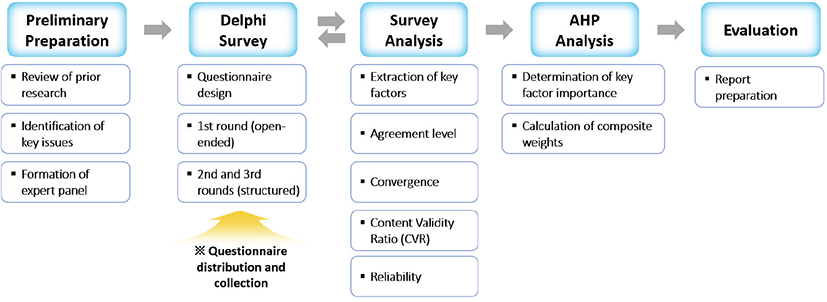
본 연구는 맨발 걷기 숲길 조성에 대한 자료를 확보하고자 델파이(Delphi) 조사와 계층화 분석(AHP: Analytic Hierarchy Process)을 활용하여 수행되었다. 델파이 기법은 중요 요인을 도출하는 데 효과적인 방법으로, 새로운 연구 분야에서 널리 사용되고 있다. 그러나 요인별 상대적 가중치를 도출하는 데에는 한계가 있으며(Jo et al., 2003, Cho et al., 2023), 이를 보완하기 위해 AHP 분석을 병행하였다(Kim, 2021). 본 연구의 전제 절차는 Figure 1에 제시되어 있다.
jksfs-114-4-428-g1
Figure 1. Overview of the research design process.
Download Original Figure

델파이 설문조사는 일반적으로 10~15명의 소집단 전문가로 구성되는 경우가 많으나(Anderson, 1997). 상이한 분야의 전문가들로 구성된 집단을 대상으로 할 경우에는 50명 이하의 인원이 적절하다는 견해도 있다(Witkin and Altschuld, 1995). 이에 본 연구에서는 숲길 조성과 관련한 학문적 지식, 기술적 전문성, 현장 경험을 보유한 학계, 연구자, 정책 입안자, 산림 기술사, 현장 공무원 등의 다양한 분야의 전문가 35인을 패널로 구성하였다. 이 중 참여가 어렵다고 의사를 밝힌 5명을 제외한 30명을 최종 조사 대상자로 확정하였다(Table 1).

Table 1. Composition of the delphi survey expert panel.
Expert group Qualifications Educational Background Years of Work Experience Number of Participants
Academia Professor Doctoral Degree 10 6
Research Institute Researcher Doctoral Degree 10 5
Policy Official Level 6 Public Official Bachelor’s Degree 20 5
Forestry Technician Certified Forestry Technician Technical College (Forestry) 20 5
Local Government (National / City / County) Forest Road Administrator Bachelor’s Degree 20 9
Total 30
Download Excel Table
2. 연구 조사 절차
1) 국내·외 선행 연구 검토

숲길에 관한 선행 연구는 많으나 맨발 걷기 숲길 조성에 관한 선행 연구는 미미하여 숲길 조성과 관련 매뉴얼 등에 관한 연구와 자연환경을 기반으로 한 숲길을 중심으로 학술연구정보서비스(RISS)에서 ‘맨발 걷기 숲길 조성’, ‘숲길 조성’, ‘트레킹 길 조성’, ‘맨발 걷기’ 등의 키워드를 활용하여 문헌 검색을 수행하였다. 총 108편의 논문이 검색되었으며, 이 중 본 연구와 직접적인 관련이 없는 ①학술 및 학위 논문이 아닌 것, ②한글이나 영문이 아닌 것, ③원문이 없는 것, ④숲길 조성과 거리가 먼 38편을 제외한 70편의 국내 논문과 해외 학술논문 1편(Barefoot Path), 그리고 맨발 걷기 숲길 조성에 대한 방법이나 매뉴얼이 없어 일반 숲길 조성 관련 매뉴얼인 ‘숲길 조성 및 운영·관리 매뉴얼’(KFS, 2022), ‘효율적인 숲길 조성·관리 및 숲길 거점 산촌 지역 활성화 연구’(Kim et al., 2013), ‘숲길 정비 매뉴얼’(Oh et al., 2005) 포함 총 74편의 자료를 공동 저자와 함께 검토하여 최종 분석 대상으로 선정하였다. 초기 평가 항목을 도출하기 위해 맨발 걷기 숲길 조성 관련 입지, 지형, 생태, 환경, 치유, 경관, 노선 및 시공 등의 요소를 축출하여 교차 확인을 하였으며, 이를 키워드, 유형화 과정을 거쳐 초기 평가 항목을 도출하였다(Table 2).

Table 2. Evaluation indicators for domestic and international research literature review and the first Delphi survey.
Domestic and international literature review(51) First Delphi survey (148)
Various location and topographic conditions, Accessibility, including transportation, residential connection, safety guidance facility, weak facility, environmental conservation, Natural, environmental, and ecological safety, Feasibility study of forest trail construction, Forest trail certification, Prefer natural forest trai, various materials, nature dirt trail, Diversity of forest trail, Diversity by user class, reciprocating type, Circular, radial, mixed route, Ecological and economic forest trail, Gentle longitudinal slope, Gentle cross slope, trail surface management, trail surface maintenance, route location, distance sign, Connectivity with other trails, Forest trail management plan, satisfaction survey, Five senses experience space, Improved healing effect, forest experience activities, Program operation, viewing space, landscape creation, mountaineering training, Rest area, convenience facilities, exercise equipment, forest damage, Appropriate level of depression, Proper thinning, visual landscape preservation, Historical, cultural, ecological resources, wildlife protection, Harmony with the ecosystem, Stay cozy, natural connection, beauty, sense of escape, sense of accomplishment, stability, efficiency
  • Disaster safety, Convenience in transportation, walking accessibility, Forest near residential area, Area where mountain owner can agree, Secure an appropriate distance, Purpose of walking barefoot, Areas where you can walk barefoot at night, open space, A place where noise is blocked, park area, Connect with the Healing Forest, Areas with many hikers, Areas with a large available population, Near parking lot, A place with good communication, gentle slope, Good drainage area, Places with few complaints, Arboretum, Tourist attractions with lots of food, Area with electricity and water facilities available, A place with convenient facilities, Urban forest, Neighborhood park, Forest bathing area, Recreational forest, Forest training center, Near the campsite, A place with a lot of free-flowing electricity underground, Area with many forest roads.

  • Diversity of terrain, where there is water, Flat, Ridge, gentle slope, A place where you can create various forest trail, A place with just the right amount of bending, Exclusion of steep slopes, Areas with aesthetic effects, Circular, North slope area, Granite Masato area, Water system with foot bath, Various difficulty levels, Areas where appropriate distance facilities are available, Foot bathing area

  • A place with beautiful natural scenery, A place with a nice valley view, ecological healthy forest, dense forest, diversity of tree species, diversity of plants and animals, Coniferous forest, Broadleaf forest, Hon Hyo-rim, myocardial edema, A place with good natural preservation, adequate shade and sunlight, A place where you can feel the seasons, Not dry and humid, Lots of sights to see, Forest Wolfdog is over 60%, Good visibility in Imnae, Rich understory vegetation, Antagonism, Landscape forest creation area, landscape plantation, III-grade or higher posts, Area free of harmful plants and animals, Forests other than forest management purposes, Excluding endangered flora and fauna areas, variety of vegetation.

  • Viewpoint, diversity of landscapes, clinical change, Places with little external exposure, A place where you can enjoy natural views, Satisfaction is higher when the view is good, Places with many healing factors, photo zone, Lots to see, Lots of wild flowers, forest diversity, open landscape, A place with beautiful forests, birdwatching team, observatory, There will be a viewpoint, open space, closed space, Where there are landmarks, Forest Density Management, Forest interior landscape management, Planting of various landscape tree species, Adequacy of ventilation, Utilization of history and culture, Storytelling such as legends, Forest commentary, Forest healing program, Experience space, Landscape elements are not really necessary, Places with many forest healing factors.

  • Facility at the foot of the mountain, Avoiding damage to nature, suitable length, Use existing forest trail, A dirt road made of natural soil, Avoid side roads

  • Easy walking slope (1-3%, 5-8%), safe and comfortable way, Gentle cross slope, Difficulty level 1~2, moderate slope, Vertical slope within 30%, Curved rather than straight, Facilities according to contour lines, Unification of information facility design, Construction of a safe forest trail, Drainage facility required, Appropriate width (1.2 m, 2 m), Construction with a small amount of cut soil, Acupressure center, Creating a shelter in the middle of the course, Avoiding the construction of yellow dirt roads, Trail construction using various materials (yellow clay, sand, gravel, chips, grass, general soil), lawn square, convenient route, circular, The distance is long (1~2 km, 1~2 hours), Observation point pavilion (rain shelter), Distance varies (short distance, long distance), Diversification of courses and difficulty levels, Get an inside view, moist yellow dirt trail, Gathering activity location, The width of the road is wide enough for small vehicles to pass through, Routes that adapt to the terrain, harmful sharp stones, Removal of tree roots, etc, Various information boards, Amenities, Minimize stairs, Avoidance of artificial facilities on road surfaces, Connectivity to nearby areas

1. Location & Topographic Factors
  • 1. Areas easily accessible by foot or public transportation

  • 2. Forests near residential areas

  • 3. Areas with high potential user population

  • 4. Areas safe from disasters, calamities, etc.

  • 5. Areas with easy emergency response access

  • 6. Areas with easily obtainable landowner consent

  • 7. Areas with low likelihood of civil complaints

  • 8. Areas with available electrical and communication nfrastructure

  • 9. Areas with potential connections to nearby forest trails and healing forests

  • 10. Well-drained area

  • 11. Areas with varied terrain (e.g., plains, ridges)

  • 12. Areas suitable for creating trails of varying difficulty levels

  • 13. Areas composed of natural soil

  • 14. Areas with granite or sandy loam soil

  • 15. Areas not exposed to strong wind corridors

  • 16. Areas that maximize the use of existing forest trails

  • 17. Areas with strong linkage to nearby communities (e.g., restaurants, lodges, public transport)

2. Ecological & Environmental Factors
  • 18. Dense forests of medium and large trees

  • 19. A forest with high stand diversity

  • 20. Areas with coniferous forests

  • 21. Areas with broadleaf forests

  • 22. Mixed-species forest area

  • 23. Forests with deep-rooted tree species

  • 24. A stable forest with diverse flora and fauna

  • 25. Areas with balanced shade and sunlight

  • 26. Well-managed forests with ecological balance

  • 27. Areas not designated as legally protected zones, such as non-stocked forest land

  • 28. Areas with minimal harmful plants or animals

3. Healing & Landscape Factors
  • 29. Areas rich in healing resources that stimulate all five senses

  • 30. An area with forest stands that visibly reflect seasonal changes

  • 31. Areas where forest healing resources can be expanded to amplify healing effects

  • 32. Low-noise area

  • 33. Areas suitable for forest education and experiential activities

  • 34. Well-ventilated area

  • 35. Areas with comfortable thermal environments

  • 36. Areas with historical and cultural resources

  • 37. Areas with diverse natural landscapes

  • 38. An area with beautiful natural scenery

  • 39. Forests with open interiors and enclosed perimeters

  • 40. Areas with existing or potential scenic viewpoints

  • 41. Areas with symbolic landmarks

  • 42. Areas rich in tourism resources

  • 43. Well-managed forests with clear interior visibility

  • 44. Areas where water resources (e.g., footbaths) can be utilized for healing

  • 45. Areas with high levels of free electrons from the ground

  • 46. North-facing areas with high humidity

4. Route Construction Factors
  • 47. A trail of appropriate length for barefoot walking

  • 48. A variety of barefoot walking courses (short and long distance)

  • 49. Constructed with a gentle longitudinal slope

  • 50. Constructed with a gentle cross slope

  • 51. Designed with varying difficulty levels to match barefoot walking purposes

  • 52. Designed as a circular route following contour lines

  • 53. Constructed wide enough to allow for two-way walking

  • 54. Constructed with diverse soil particle compositions

  • 55. Established in the forest foothill area

  • 56. Rest areas placed at appropriate intervals along the trail

5. Facility Factors
  • 57. Escape routes created at appropriate intervals along the trail

  • 58. Rest and evacuation facilities built at observatories and viewpoints

  • 59. Sufficient amenities and sanitation facilities installed

  • 60. Minimize facilities unsuitable for barefoot walking

  • 61. Install washbasins, footbaths, air blowers, lockers, toilets, and parking lots at the main entrance and exit

  • 62. Installation of both longitudinal and transverse drainage systems

  • 63. Install signboards with a unified design

  • 64. Provide spaces and facilities for forest healing programs

  • 65. Create suitable areas for gatherings and group activities

  • 66. Install various types of informational signage

Download Excel Table
2) 전문가 델파이 조사

먼저, 맨발 걷기 숲길 조성에 대한 핵심 요소를 도출하기 위해, 총 30명의 전문가 패널을 대상으로 1차 델파이 조사를 개방형 설문 방식으로 실시하였다. 조사는 이메일과 모바일을 통해 진행하였다. 이후 2차 및 3차 델파이 조사는 1차 결과의 타당성을 검증하고, 중요 요인의 적합성을 평가하기 위해 폐쇄형 문항으로 구성하였으며, 각 문항은 7점 Likert 척도로 응답하도록 설계하였다. 2차 조사에서는 1차 개방형 설문 항목도 일부 포함하여 추가 의견을 수렴하였다.

평가지표의 적합성 평가는 평균값과 내용타당도(Content Validity Ratio; CVR)를 기준으로 분석하였다. 평가지표의 적합성 기준은 평균값 5.72 이상, 응답자 수에 따른 내용타당도 비율(CVR)은 Lawshe(1975)가 제시한 30명 전문가 패널 기준치인 0.330 이상으로 설정하였다. 또한 설문 결과의 수렴 정도를 나타내는 수렴도(Convergence)가 0에 가까울수록 완전한 합의를 의미하며, 값이 커질수록 의견 간 편차가 크다는 것을 나타낸다. 본 연구에서는 수렴도 기준을 0.50 이하로 설정하였다(Martino, 1993).

조사 기간은 1차가 2024년 11월 25일부터 12월 24일까지 30일간, 2차는 2025년 3월 20일부터 3월 28일까지, 3차는 2025년 4월 9일부터 4월 15일까지 진행되었다.

3) 계층화 분석(AHP)

계층화 분석(Analytic Hierarchy Process; AHP)은 다수의 패널을 대상으로 계층적인 분류를 수행하고, 속성별로 중요 요소를 파악하여 우선순위를 평가하는 방법이다(Kim et al., 2015). 이 기법은 속성 간의 여러 문제를 세분화하여 쌍대비교(Pairwise Comparison)로 중요도를 산출하고 최상의 대안을 찾는 방법으로 이용된다(Seo et al., 2011; Lee et al., 2022). AHP 분석에서 사용되는 척도는 중심값인 1을 기준으로 양쪽으로 9개씩 총 17개이지만, 기존 AHP 조사에서 일관성 부족 문제가 있다고 지적됨에 따라, 본 연구에서는 5점 척도를 양방향 9점 척도로 재구성하여 일관성을 보완하였다(Song and Lee, 2012).

본 연구의 AHP 분석은 3차에 걸친 델파이 조사자료를 바탕으로 도출된 맨발 걷기 숲길 조성 평가지표를 대상으로 수행되었다. 분석을 위해 상위 요소는 1계층, 하위 요소는 2계층으로 분류하였으며, 설문은 이메일과 모바일을 통해 진행되었다. 설문 자료 수집은 2025년 4월 22일부터 4월 28일까지 이루어졌다.

연구 결과 및 고찰

1. 초기 평가지표 도출

최종 선정된 74편의 문헌에서 도출된 51개와 1차 델파이 조사와 2차 조사에서 추가된 148개를 종합하여 총 199개의 평가지표를 도출하였다(Table 2). 평가지표별 특성에 따라 내용이 중복되거나 의미가 유사한 항목에 대해서 전문가 패널들의 의견을 수렴하여 상위 요소 5개 항목과 하위 요소 66개로 구성된 초기 평가지표를 도출하였다. 이를 세부적으로 살펴보면 상위 요소(5개 항목)는 ‘입지ㆍ지형적 요소’, ‘생태ㆍ환경적 요소’, ‘치유ㆍ경관적 요소’, ‘노선 요소’, ‘시설물 요소’로 구성되었다.

상위 요소별 하위 요소를 살펴보면 상위 요소 1. 입지ㆍ지형적 요소는 17개 하위 요소로 접근성, 재난 재해, 사고 대처, 지형의 다양성 등 숲길의 접근과 재난 안정성 위주로, 상위 요소 2. 생태ㆍ환경적 요소는 11개 하위 요소로 울창한 산림, 임분의 다양성, 생태적으로 안정된 임분을 중요시 하였다. 상위 요소 3. 치유ㆍ경관적 요소는 18개 하위 요소로 오감 만족, 치유 자원이 풍부한 지역, 조망이 좋은 곳, 자연 경관이 아름다운 곳으로 나타났으며, 상위 요소 4. 노선 요소는 9개 하위 요소로 맨발 걷기에 알맞은 거리, 코스, 완만한 종단경사, 순환형 노선 등으로 맨발 걷기 목적에 적합한 내용으로, 상위 요소 5. 시설물 요소는 11개 하위 요소로 쉼터, 대피소, 위생시설, 편익 시설, 안내판 등으로 구성되었다(Table 2).

2. 최종 평가지표 도출

상위 5개 항목별 최종 평가지표 도출을 위해 하위 지표별 적합성 평가를 실시하였다. 66개의 하위 요소에 대한 2차 델파이 조사를 통하여 평가 지표별 평균값 5.00 미만, 내용타당도 비율 0.330 미만(패널 수 30명 기준)인 평가지표는 적합성 기준을 충족하지 못한 것으로 간주하여 제외하였다. 그 결과, 16개 지표가 제외되어 총 50개의 평가지표가 도출되었다(Table 3).

Table 3. Results of the second-round delphi survey.
Indicators Mean CVR Compare
1. Location & Topographic Factors 1. Areas easily accessible by foot or public transportation 6.40 0.933
2. Forests near residential areas 6.27 0.867
3. Areas with high potential user population 6.00 0.733
4. Areas safe from disasters, calamities, etc. 6.60 0.933
5. Areas with easy emergency response access 6.43 0.933
6. Areas with easily obtainable landowner consent 5.77 0.533
7. Areas with low likelihood of civil complaints 5.67 0.533
8. Areas with available electrical and communication infrastructure 5.57 0.667
9. Areas with potential connections to nearby forest trails and healing forests 6.23 0.733
10. Well-drained area 5.73 0.600
11. Areas with varied terrain (e.g., plains, ridges) 5.40 0.600
12. Areas suitable for creating trails of varying difficulty levels 5.13 0.200 exception
13. Areas composed of natural soil 5.43 0.600
14. Areas with granite or sandy loam soil 4.63 0.267 exception
15. Areas not exposed to strong wind corridors 4.60 0.000 exception
16. Areas that maximize the use of existing forest trails 5.97 0.867
17. Areas with strong linkage to nearby communities (e.g., restaurants, lodges, public transport) 5.37 0.400
2. Ecological & Environmental Factors 18. Dense forests of medium and large trees 5.60 0.733
19. A forest with high stand diversity 5.77 0.600
20. Areas with coniferous forests 4.87 0.200 exception
21. Areas with broadleaf forests 4.73 0.067 exception
22. Mixed-species forest area 5.47 0.467
23. Forests with deep-rooted tree species 4.93 0.133 exception
24. A stable forest with diverse flora and fauna 5.40 0.467
25. Areas with balanced shade and sunlight 6.17 0.933
26. Well-managed forests with ecological balance 5.77 0.667
27. Areas not designated as legally protected zones, such as non-stocked forest land 5.03 0.267 exception
28. Areas with minimal harmful plants or animals 5.83 0.667
3. Healing & Landscape Factors 29. Areas rich in healing resources that stimulate all five senses 6.10 0.800
30. An area with forest stands that visibly reflect seasonal changes 5.80 0.600
31. Areas where forest healing resources can be expanded to amplify healing effects 5.60 0.667
32. Low-noise area 5.77 0.733
33. Areas suitable for forest education and experiential activities 5.27 0.267 exception
34. Well-ventilated area 5.37 0.600
35. Areas with comfortable thermal environments 5.03 0.200 exception
36. Areas with historical and cultural resources 4.63 −0.133 exception
37. Areas with diverse natural landscapes 5.47 0.667
38. An area with beautiful natural scenery 5.63 0.867
39. Forests with open interiors and enclosed perimeters 5.13 0.400
40. Areas with existing or potential scenic viewpoints 5.23 0.333
41. Areas with symbolic landmarks 4.87 0.067 exception
42. Areas rich in tourism resources 4.70 −0.133 exception
43. Well-managed forests with clear interior visibility 5.57 0.600
44. Areas where water resources (e.g., footbaths) can be utilized for healing 5.50 0.467
45. Areas with high levels of free electrons from the ground 4.50 −0.133 exception
46. North-facing areas with high humidity 3.47 −0.800 exception
4. Route Construction Factors 47. A trail of appropriate length for barefoot walking 6.07 0.800
48. A variety of barefoot walking courses (short and long distance) 6.40 1.000
49. Constructed with a gentle longitudinal slope 5.93 0.733
50. Constructed with a gentle cross slope 5.90 0.800
51. Designed with varying difficulty levels to match barefoot walking purposes 5.73 0.667
52. Designed as a circular route following contour lines 5.83 0.733
53. Constructed wide enough to allow for two-way walking 5.97 0.733
54. Constructed with diverse soil particle compositions 4.73 0.000 exception
55. Established in the forest foothill area 4.90 0.000 exception
56. Rest areas placed at appropriate intervals along the trail 5.73 0.667
5. Facility Factors 57. Escape routes created at appropriate intervals along the trail 5.70 0.600
58. Rest and evacuation facilities built at observatories and viewpoints 5.70 0.667
59. Sufficient amenities and sanitation facilities installed 5.43 0.400
60. Minimize facilities unsuitable for barefoot walking 6.00 0.800
61. Install washbasins, footbaths, air blowers, lockers, toilets, and parking lots at the main entrance and exit 5.97 0.667
62. Installation of both longitudinal and transverse drainage systems 6.07 0.800
63. Install signboards with a unified design 5.73 0.600
64. Provide spaces and facilities for forest healing programs 5.23 0.400
65. Create suitable areas for gatherings and group activities 5.47 0.600
66. Install various types of informational signage 5.53 0.733
Download Excel Table

2차 델파이 조사 결과의 합의도를 높이기 위해 2차와 같은 방법으로 3차 델파이 조사를 진행하였으며, 이때는 평균값 5.72 미만 또는 내용타당도 0.330 미만을 기준으로 적용하였다. 그 결과, 25개 지표가 추가로 제거되었고, 최종 평가지표는 입지·지형적 요소(9개 항목), 생태·환경적 요소(2개 항목), 치유·경관적 요소(2개 항목), 노선 요소(7개 항목), 시설물 요소(5개 항목) 등 총 25개의 하위 평가지표가 도출되었다(Table 4).

Table 4. Final evaluation indicators derived from the delphi survey.
Indicators Mean CVR Compare
Location & Topographic Factors 1. Areas easily accessible by foot or public transportation 6.33 0.933
2. Forests near residential areas 6.23 1.000
3. Areas with high potential user population 6.07 0.933
4. Areas safe from disasters, calamities, etc. 6.63 1.000
5. Areas with easy emergency response access 6.30 0.867
6. Areas with easily obtainable landowner consent 5.32 0.600 exception
7. Areas with low likelihood of civil complaints 5.40 0.400 exception
8. Areas with available electrical and communication infrastructure 5.73 0.800
9. Areas with potential connections to nearby forest trails and healing forests 5.80 0.667
10. Well-drained area 6.07 0.867
11. Areas with varied terrain (e.g., plains, ridges) 5.43 0.667 exception
12. Areas composed of natural soil 5.67 0.733 exception
13. Areas where existing forest trail can be used to the fullest extent possible 5.90 0.800
14. Areas with strong linkage to nearby communities (e.g., restaurants, lodges, public transport) 5.23 0.467 exception
Ecological & Environmental Factors 15. Dense forests of medium and large trees 5.47 0.667 exception
16. A forest rich in biodiversity 5.60 0.667 exception
17. Mixed-species forest area 5.43 0.667 exception
18. A stable forest with diverse flora and fauna 5.40 0.667 exception
19. Areas with balanced shade and sunlight 6.10 0.933
20. Well-managed forests with ecological balance 5.63 0.667 exception
21. Areas with minimal harmful plants or animals 5.93 0.867
Healing & Landscape Factors 22. Areas rich in healing resources that stimulate all five senses 5.97 0.733
23. An area with forest stands that visibly reflect seasonal changes 5.83 0.867
24. Areas where forest healing resources can be expanded to amplify healing effects 5.50 0.533 exception
25. Low-noise area 5.57 0.667 exception
26. Well-ventilated area 5.57 0.600 exception
27. Areas with diverse natural landscapes 5.60 0.667 exception
28. An area with beautiful natural scenery 5.70 0.867 exception
29. Forests with open interiors and enclosed perimeters 5.13 0.400 exception
30. Areas with existing or potential scenic viewpoints 5.07 0.333 exception
31. A forest trail that encourages patience and mindfulness 5.53 0.533 exception
32. Areas where water resources (e.g., footbaths) can be utilized for healing 5.60 0.667 exception
Route Construction Factors 33. A trail of appropriate length for barefoot walking 6.17 0.867
34. A variety of barefoot walking courses (short and long distance) 6.10 0.933
35. Constructed with a gentle longitudinal slope 5.83 0.867
36. Constructed with a gentle cross slope 5.87 0.867
37. Designed with varying difficulty levels to match barefoot walking purposes 5.43 0.533 exception
38. Designed as a circular route following contour lines 5.77 0.667
39. Constructed wide enough to allow for two-way walking 5.73 0.733
40. Rest areas placed at appropriate intervals along the trail 5.90 0.867
Facility Factors 41. Escape routes created at appropriate intervals along the trail 5.77 0.733
42. Rest and evacuation facilities built at observatories and viewpoints 5.67 0.600 exception
43. Sufficient amenities and sanitation facilities installed 5.47 0.533 exception
44. Minimize facilities unsuitable for barefoot walking 6.23 0.867
45. Install washbasins, footbaths, air blowers, lockers, toilets, and parking lots at the main entrance and exit 5.90 0.733
46. Installation of both longitudinal and transverse drainage systems 6.00 0.933
47. Install signboards with a unified design 5.80 0.733
48. Provide spaces and facilities for forest healing programs 4.90 0.200 exception
49. Create suitable areas for gatherings and group activities 5.03 0.267 exception
50. Install various types of informational signage 5.37 0.533 exception
Download Excel Table
3. 평가지표별 우선순위
1) AHP 연구설계 및 모형 분석

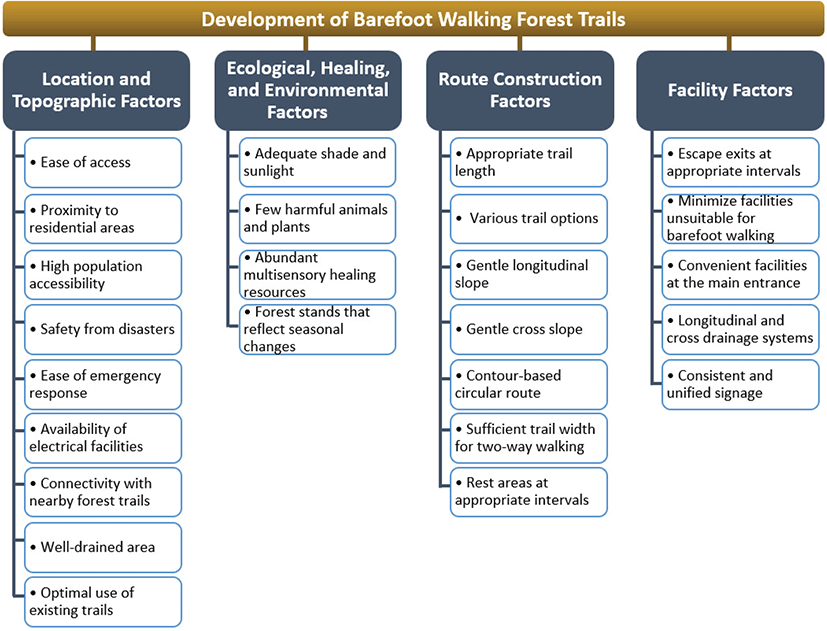
본 연구는 Saaty(1980)가 제시한 9점 척도를 사용하였으며, 설문은 델파이 조사를 수행한 동일한 전문가 패널을 대상으로 이메일이나 모바일을 통해 실시하였다. 총 30부의 응답 중 데이터 활용이 어려운 2부를 제외하고 최종적으로 28부를 분석하였다. 델파이 조사 결과 도출된 상위 요소 5개 중 ‘생태·환경적 요소’와 ‘치유·경관적 요소’는 하위 요소가 각각 2개에 불과하여, AHP 분석의 일관성과 신뢰도를 높이기 위해 이 두 요소를 ‘생태·치유·환경적 요소’로 통합하였다. 이는 유사한 대안을 그룹으로 묶어서 패널들이 보다 쉽게 평가할 수 있도록 한 조치였다(Song et al., 2009). 통계분석은 클라우드 기반 사회과학 연구 자동화(Social Science Research Automation, SSRA) 플랫폼(ssra.or.kr)을 활용하여 수행하였다. AHP 연구설계 및 모형 분석은 델파이 분석 결과를 토대로 구성되었으며, 맨발 걷기 숲길 조성의 주요 요소에 대한 직관적 이해를 높이고 정보 체계와 시각적 접근 방식을 효율적인 관리를 위해 트리 계층 구조로 설계하였다(Figure 2).
jksfs-114-4-428-g2
Figure 2. Tree Hierarchy of Key Evaluation Indicators for Barefoot Walking Forest Trails.
Download Original Figure
2) 일관성과 대응 가능 지수 평가

AHP는 설문 응답자가 일관성 있게 평가에 참여했는지를 확인하기 위해 일관성 비율(CR; Consistency Ratio)을 참고하여 신뢰성을 검증한다. 일관성 비율(CR)은 일관성 지수(CI; Consistency Index)를 임의 지수(RI; Random Index)로 나눈 값을 말하며, 일반적으로 CR 값이 0.1~0.2 이하일 때 응답의 신뢰도가 있다고 본다(Saaty, 1980). 본 연구에서는 기준값을 0.2 이하로 설정하여 설문조사의 신뢰도를 평가하였고, 그 결과 28부의 모든 설문지에서 일관성 비율이 0.1 미만으로 나타나 응답 일관성이 매우 우수한 것으로 판단하였다. 또한 28명의 전문가 응답 결과는 기하평균 방법을 활용하여 가중치를 산출하였으며, 최종 종합 가중치를 도출하였다. 일관성 비율 관련 세부 결과는 Table 5에 제시하였다.

Table 5. Weights and consistency ratios of first-level evaluation categories for barefoot walking forest trail development.
Level 1 Indicators Weight Maximum Eigenvalue (λmax) Consistency Index (CI) Consistency Ratio (CR)
1. Location and Topographic Factors 0.336 9.03268 0.00409 0.00290
2. Ecology, Healing, Environmental Factors 0.268 4.01479 0.00493 0.00280
3. Route Construction Factors 0.241 7.00878 0.00146 0.00548
4. Facility Factors 0.155 5.02048 0.00512 0.00111
Total 1.000 4.00784 0.00261 0.00457

※ CR≦0.1 : High consistency

Download Excel Table
3) AHP 1계층 상위 요소 중요도 분석 결과

1계층 상위 요소의 중요도를 산출하기 위해 AHP 분석을 실시한 결과, 1계층 상위 요소 간의 상대적 중요도 분석에서 일관성 비율(CR)은 0.00457로 0.1 미만으로 나타나 분석 결과의 신뢰도가 충분히 확보된 것으로 판단된다. 상위 요소별 상대적 중요도를 살펴보면, ‘입지·지형적 요소’가 0.336으로 가장 높은 중요도를 나타내어, 맨발 걷기 숲길 조성에서 핵심 요소임을 확인할 수 있었다. 이어서 ‘생태·치유·환경적 요소’(0.268), ‘노선 시공 요소’(0.241), ‘시설물 요소’(0.155)의 순서로 중요도가 나타났다(Table 5). 이는 인간과 자연의 연결성을 고려할 때, 주변 입지와 생태계의 일부로서 느끼는 감정은 심미적, 정신적으로 안정과 만족을 제공하고 인간은 본능적으로 자연에 의존하게 되어 맨발 걷기 숲길을 조성하는 상위 요소 중 입지·지형적 요소와 생태·치유·환경적 요소가 다른 요소에 비해 상대적으로 중요하게 도출된 것으로 판단 된다. 이것은 이용자들의 접근성이 얼마나 좋은 곳에 위치하는지에 대한 입지적인 문제와 안전과 연결된 지형적인 요소, 자연과 호흡하면서 운동할 수 있는 생태·환경의 중요성을 나타낸 것으로 볼 수 있다. 이러한 결과는 ‘무등산 도립공원 등산로 선정 요인’에서 이용자는 경관미와 안정성을 가장 중요시하고, 자연과의 접촉이 휴양 동기에 영향을 미친다는 Kim and Oh(1998)의 연구와 Lee et al.(2011)의 지리산 숲길 이용객의 전반적인 만족도와 행동 의도는 자연 경관이 가장 큰 영향을 미친다는 연구 결과와 일치한다.

4) AHP 2계층 하위 요소 중요도 분석 결과

맨발 걷기 숲길 조성 평가지표 중 하위 요소 2계층에 해당하는 지표 간의 상대적 중요도 분석 결과는 Table 6에 제시하였다. 계층화 분석(AHP)의 구조에서 각 계층별 요소 항목의 개수가 다를 경우 가중치 산정에 왜곡이 발생할 수 있으므로, 본 연구에서는 오류를 개선하기 위해 수정 가중치 모델을 기반으로 분석을 수행하였다(Choi, 2020).

Table 6. Revised Weights of Two-Level Evaluation Indicators for Barefoot Walking Forest Trail Development.
Level 1 indicators Weight Level 2 indicators Weight Consistency Ratio (CR) Final Weight Modify Index (Step 1) Modified Final Weight (Step 1) Modify Index (Step 2) Modified Final Weight (Final) Sub-item ranking Overall ranking
Location & Topographic Factors 0.336 ① Areas easily accessible by foot or public transportation 0.103 0.00290 0.035 9/25 (.36) 0.012 1/0.262 (3.812) 0.0475 7 9
② Forests near residential areas 0.119 0.040 0.014 0.0549 3 3
③ Areas with high potential user population 0.114 0.038 0.014 0.0526 5 5
④ Areas safe from disasters, calamities, etc. 0.167 0.056 0.020 0.0770 1 1
⑤ Areas with easy emergency response access 0.131 0.044 0.016 0.0604 2 2
⑥ Areas with available electrical and communication infrastructure 0.068 0.023 0.008 0.0314 9 19
⑦ Areas with potential connections to nearby forest trails and healing forests 0.107 0.036 0.013 0.0493 6 7
⑧ Well-drained area 0.075 0.025 0.009 0.0346 8 16
⑨ Areas where existing forest trail can be used to the fullest extent possible 0.116 0.039 0.014 0.0535 4 4
Subtotal 1.000 0.336 0.120 0.4612
Ecological, Healing, & Environmental Factors 0.268 ① Areas with balanced shade and sunlight 0.223 0.00280 0.060 4/25 (.16) 0.010 1/0.262 (3.812) 0.0365 3 13
② Areas with minimal harmful plants or animals 0.186 0.050 0.008 0.0304 4 20
③ Areas rich in healing resources that stimulate all five senses 0.315 0.085 0.013 0.0515 1 6
④ An area with forest stands that visibly reflect seasonal changes 0.276 0.074 0.012 0.0451 2 10
Subtotal 1.000 0.268 0.043 0.1635
Route Construction Factors 0.241 ① A trail of appropriate length for barefoot walking 0.141 0.00548 0.034 7/25 (.28) 0.010 1/0.262 (3.812) 0.0363 4 14
② Various courses to suit the purpose of barefoot walking 0.191 0.046 0.013 0.0491 1 8
③ Constructed with a gentle longitudinal slope 0.153 0.037 0.010 0.0394 2 11
④ Constructed with a gentle cross slope 0.117 0.028 0.008 0.0301 7 21
⑤ Designed as a circular route following contour lines 0.148 0.036 0.010 0.0381 3 12
⑥ Constructed wide enough to allow for two-way walking 0.126 0.030 0.009 0.0324 5 17
⑦ Rest areas placed at appropriate intervals along the trail 0.124 0.030 0.008 0.0319 6 18
Subtotal 1.000 0.241 0.068 0.2573
Facility Factors 0.155 ① Escape routes created at appropriate intervals along the trail 0.156 0.00111 0.024 5/25 (.20) 0.005 1/0.262 (3.812) 0.0184 4 24
② Minimize facilities unsuitable for barefoot walking 0.186 0.029 0.006 0.0220 3 23
③ Install washbasins, footbaths, air blowers, lockers, toilets, and parking lots at the main entrance and exit 0.305 0.047 0.009 0.0360 1 15
④ Installation of both longitudinal and transverse drainage systems 0.221 0.034 0.007 0.0261 2 22
⑤ Install signboards with a unified design 0.132 0.020 0.004 0.0156 5 25
Subtotal 1.000 0.154 0.031 0.1181
Total 1.000 - - 1.000 - 0.262 1.000
Download Excel Table

‘입지·지형적 요소’를 구성하는 9개 지표 간 상대적 중요 요소를 분석한 결과, ‘재난·재해 등으로부터 안전한 지역’이 0.0770으로 가장 높게 나타났다. 다음으로는 ‘사고 대응이 쉬운 지역’(0.0604), ‘생활권 인근지역의 숲’(0.0549), ‘기존 숲길을 최대한 이용 가능한 지역’(0.0535) 등으로 나타났으며, 각 지표의 일관성 비율(CR)은 0.00290로 나타나 ‘만족스러운 수준’의 일관성을 보였다. 이것은 사회적으로 민감한 재난 및 안전에 관한 관심이 반영된 것으로 볼 수 있다. 즉 생활권과 가까운 숲에서 기존 숲길을 바탕으로 산림 훼손을 최소화하여 재난과 사고로부터 안전하게 맨발 걷기를 하여야 한다는 것을 의미한다. 또한 맨발 걷기는 신발을 벗고 운동하므로 발생할 수 있는 부상에 대한 우려로 안전에 대한 욕구가 가중된다는 것을 의미한다. 이는 숲길 조성 지역의 환경훼손을 최소화하고 이용객의 쾌적하고 안전한 이용을 보장하고(Choi, 2014), 맨발 걷기를 하는 사람들은 접근이 용이하고 숲에 장시간 체류하기 때문에 안전한 맨발 걷기 숲길의 확충과 관리가 이루어져야 한다는 Joung and Yeon(2023) 연구 결과와 부합한다.

‘생태·치유·환경적 요소’를 구성하고 있는 4개 지표 간의 상대적 중요도는 ‘오감 만족 등 산림치유 자원이 풍부한 지역’이 0.0515로 가장 높았다. 다음은 ‘계절별 변화를 느낄 수 있는 임상으로 구성된 지역’(0.0451), ‘적당한 그늘과 햇빛이 있는 지역’(0.0365), ‘유해 동식물이 적은 지역’(0.0304) 순으로 나타났다. 각 지표에 대한 일관성 비율(CR)은 0.00280으로 ‘만족스러운 수준’의 일관성을 보였다. 맨발 걷기도 건강을 증진하는 치유 활동으로 오감을 만족할 수 있고, 계절의 변화를 느낄 수 있는 지역, 생태·환경적으로 안정된 곳에서의 활동이 만족감을 높일 수 있다. Sung(2020) 연구에서도 환경 차이에 따라 치유 효과가 높은 산책로는 도시보다는 교외가, 도심지 강변 산책로보다는 물과 숲 공존 산책로 또는 숲 산책로가 심리·생리적 치유 효과가 높게 나타난다고 보고한바 있다.

‘노선 시공 요소’에 해당하는 7개 지표 간의 상대적 중요도에서는 ‘맨발 걷기 목적에 맞는 다양한 코스(단·장거리 등)’가 0.0491로 가장 높게 나타났다. 아울러 ‘완만한 종단경사로 시공’(0.0394)), ‘등고선 선형의 순환형 노선으로 시공’(0.0381), ‘맨발 걷기 목적에 맞는 적정한 거리로 조성’(0.0363), ‘교행 가능 노폭으로 시공’(0.0324), ‘숲길 적정거리마다 쉼터 조성’(0.0319), ‘완만한 횡단경사로 시공’(0.0301) 순으로 나타났다. 각 지표에 대한 일관성 비율(CR)은 0.00548로 ‘만족스러운 수준’의 일관성을 보였다. 시공 요소는 맨발 걷기 목적에 맞는 다양한 코스 및 거리, 완만한 종단경사, 등고선 방향 선형의 순환형, 적정한 거리 및 노폭에 대한 시공 요소가 중요하게 나타났다. 숲길에서의 보행거리는 남녀 평균 1.8 km, 보행 속도는 시간당 2.51 km/h이고(Kim and Lim, 2017), 맨발 걷기 1회 이용 시 1~2시간 정도 소요되는 사람이 52.3%가 가장 많다(Park, 2023)고 한다. 아울러 Shin(2022)은 산책로 적정 길이는 1.0 km~1.5 km 이상, 적정 경사도는 4% 이내가 적정하다고 주장하였다. 따라서 맨발 걷기 숲길을 조성하고자 할 때는 거리, 경사도, 보행 시간 등을 감안하여 단조로운 노선의 숲길보다는 건강 증진을 위한 맨발 걷기 목적에 부합하도록 코스를 설계하여 맨발 숲길 이용자들에게 다양한 경험을 제공하여 만족도를 높여야 한다고 판단된다.

‘시설물 요소’를 구성하는 5개 지표의 상대적 중요도에서는 ‘주 출입구에 세면대, 세족장, 에어건, 물품 보관함, 화장실, 주차장 등 설치’가 0.0360으로 가장 높았으며, 다음은 ‘종단·횡단 배수시설 시공’(0.0261), ‘맨발 걷기 목적에 부적합한 시설물 최소화’(0.0220), ‘숲길 적정거리에 탈출로 조성’(0.0184), ‘통일감 있는 디자인 안내판 시공’(0.0156) 순으로 나타났다. 각 지표에 대한 일관성 비율(CR)은 0.00111로 ‘만족스러운 수준’이었다. 시설물의 주요 요소는 맨발 걷기 목적에 부합하도록 주요 편익시설의 중요성이 강조되었다. 맨발 걷기 시작과 끝나는 지점에는 세족장, 세면대, 먼지털이, 화장실, 주차장 등의 시설물을 설치하고 맨발 걷기 목적에 부적합한 시설물은 부득이한 경우를 제외하고는 최소화하여야 한다는 것을 알 수 있다. 이는 맨발 산책로 편의시설 요구도가 신발장, 세족장, 화장실, 야간 조명, 휴식 공간 순으로 나타났으며, 숲 산책로의 경우 화장실과 세족장이 가장 필요한 편의시설로 나타난 Shin(2022)의 연구와 일치한다.

결론 및 제언

본 연구는 맨발 걷기 숲길 조성에 대하여 도출된 평가 요소별 상대적 중요도와 우선순위를 분석하여 이용자들에게는 안전하고 쾌적한 숲길 걷기 환경을 제공하고, 맨발 걷기 숲길을 조성하는 기관에는 실무에 적용할 수 있는 기초 자료를 제공하고자 수행되었다. 전문가 패널을 통한 델파이 조사와 AHP 기법을 적용하여 맨발 걷기 숲길 조성에 필요한 상위 4개 요소와 하위 25개 평가지표를 도출하고 평가 지표별 우선순위를 분석하였다. 본 연구의 주요 결과는 다음과 같다.

첫째, 맨발 걷기 숲길 조성 상위 요소에 대한 중요도는 자연이 주는 입지·지형적인 요소와 생태·치유·환경적 요소가 우선 고려 되어야 하는 것으로 나타났다. 이것은 숲의 여러 가지 고려 요소 중 맨발이라는 특수성과 안전에 대한 인식, 숲이 주는 쾌적감과 치유 환경의 중요성이 핵심적으로 고려되어야 한다는 점을 시사한다. Shin(2022)의 연구에서도 맨발 산책로의 ‘식물환경과 공기 질, 빛의 양’에 대해 90% 이상의 응답자가 “좋다”라고 평가하였으며, 산책로 조성 장소 또한 도시 숲길, 도시공원, 아파트 순으로 나타나 자연 친화적이고 생태적인 환경이 맨발 걷기 숲길에 대한 이용자의 선호도와 만족도를 높인다는 본 연구 결과와 맥락을 같이한다.

둘째, 맨발 걷기 상위 요소 중 ‘입지·지형적 요소’에서는 최근 사회 전반에서 재난과 안전에 대한 규제·기준이 정비되고 인식이 높아지는 상황을 고려할 때 맨발 숲길 조성에도 안전 대책이 중요한 고려 요소로 나타나고 있다. 재난·재해 등으로부터 안전한 지역, 사고 대응이 쉬운 지역 등이 중요한 요소로 나타난 것은 숲길 안전 대책 강화와 신속한 대처를 위해 적합한 숲길 난이도와 이용자가 추구하는 목적에 적합하여야 한다는 Oh(2014)의 연구 결과와 부합한다.

셋째 ‘생태·치유·환경적 요소’에서는 숲에서의 맨발 걷기 활동은 단순한 신체 운동을 넘어 자연과의 교감을 통해 신체적·정신적 건강을 증진하려는 것으로, 오감 만족 등 산림치유 자원이 풍부한 지역, 계절의 변화를 느낄 수 있는 임상, 적당한 그늘과 햇빛이 있는 지역 등은 산림치유와 밀접하게 관련되어 있음을 보여준다.

넷째, ‘노선 시공 요소’에서는 맨발 걷기 목적에 맞는 다양한 코스 및 거리(단거리, 장거리 등)로 조성하고, 맨발이라는 특수성에 의한 난이도, 안전을 위한 완만한 종단경사, 등고선 선형의 순환형 등으로 중요도가 나타났다. 이는 KFS(2022)의 󰡔숲길 조성 및 운영·관리 매뉴얼󰡕에서 숲길의 난이도는 구간 경사도가 낮고, 구간거리는 짧으며, 노면 폭은 넓을수록 점수가 낮아지며, 이러한 조건이 갖추어질수록 쉬운 난이도로 평가된다. 즉, 난이도가 낮은 숲길이 맨발 걷기에 보다 적합하다는 점에서, 본 연구 결과는 기존 매뉴얼이 제시하는 방향성과 일치한다고 볼 수 있다.

다섯째, ‘시설물 요소’에서는 맨발 걷기 숲길의 시설물은 쾌적한 운동 환경을 위해 주 출입구에 세면대·세족장·에어건·물품 보관함·화장실·주차장 등 설치가 필요하며, 맨발 걷기 목적에 부적합한 시설물을 최소화하여야 한다. 이는 맨발 산책로 편의시설 요구도가 신발장, 세족장, 화장실, 야간 조명, 휴식 공간 등이 가장 필요한 편의시설로 나타난 Shin(2022)의 연구와 일치한다.

여섯째, 맨발 걷기 숲길 조성 관련 하위 25개 평가지표의 중요도 우선순위를 고려할 경우 “재난·재해 등으로부터 안전한 지역 >사고 대응이 쉬운 지역 >생활권 인근지역의 숲 >기존 숲길을 최대한 이용 가능한 지역 > 이용 가능 인구가 많은 지역 >오감만족 등 산림치유 자원이 풍부한 지역 >인근 숲길, 치유의숲 등과 시설 연계가 가능한 지역 >맨발 걷기 목적에 맞는 다양한 코스(단거리, 장거리)”등의 순으로 나타났다. 이것은 맨발 걷기 숲길 조성에 재난과 안전을 위한 지역과 사고가 있는 경우 신속하게 대처할 수 있는 지역이 가장 중요하게 인식되고 있으며, 기존 숲길을 이용하여 산림 훼손을 최소화하고 오감만족 등 맨발 걷기 목적에 맞는 맨발 숲길이 만들어져야 한다는 것을 시사하고 있다. 이는 최근 맨발 이용객이 급증하여 숲길 이용의 양상이 ‘맨발’과 ‘신발 착용’으로 분화되고 있으며, 이에 따라 맨발 이용객을 고려한 숲길 조성 및 관리가 이루어져야 한다(Joung, 2023). 따라서 본 연구는 맨발 걷기 숲길 조성을 위한 평가지표 우선순위와 정책적 의사 결정의 근거 자료를 제공한다는 점에서 의의가 크며, 국내 최초로 맨발 걷기 숲길 조성에 관한 체계적인 기초 자료를 제시한 연구라는 데에 학문적 가치가 있다.

다만, 본 연구에서는 전문가 패널에게만 조사된 것으로 현장에서 직접 맨발 숲길을 이용하는 사람들에 대한 조사가 이루어지지 못해 이용자들의 다양한 의견을 반영하지 못했다는 한계가 있다. 앞으로 본 연구를 바탕으로 맨발 걷기 숲길 조성 평가표를 만드는 연구와 공원이나 하천변을 활용한 맨발 걷기 길 조성과 관리를 위한 확장 연구가 이루어지길 기대한다.

References

1.

Anderson, D.R. 1997. Strand of System, The Philosophy of C, Peirce. West Lafayette. Purdue University Press, US.

2.

Brown, K.M. 2017. The haptic pleasures of ground-feel: The role of textured terrain in motivating regular exercise, Health & Place 46(2017): 307-314.

3.

Changwon City. 2024. Barefoot walking trails closely related to daily life are progressing steadily, https://www.mediagn.co.kr, (2024. 4.15, Gyeongnam Media).

4.

Chevalier, G., Sinatra, S.T., Oschman, J.L. and Delany, R.M. 2013. Earthing (Grounding) the Human Body Reduces BloodViscositya Major Factor in Cardiovascular Disease, The Journal of Alternative and Complementary Medicine 19(2): 102-110.

5.

Chevalier, G., Sinatra, S.T., Oschman, J.L., Sokal, K. and Sokal, P. 2012. Earthing: Health implications of reconnecting the human body to the Earth’s surface electrons. Journal of Environmental and Public Health, 2012, Article, p 8.

6.

Cho, D.H., An, S.M., Joo, R.W., Lee, M.J. and An, K.W., 2023. Identification of Key Forest ESG Factors Using Delphi/AHP Analysis Techniques, Korea Forest Economic Research Institute, Seoul, Korea 20(2): 75-91.

7.

Choi, J.H., Kim, H.J., Shin, C.S., Yeon, P.S. and Lee, J.S., 2016. The Effect of 12-Week Forest Walking on Functional Fitness, Self-Efficacy, and Stress in the Middle-Aged Women, Journal of the Korean Society of Forest Recreation, Seoul, Korea 20(3): 27-38.

8.

Choi, J.S. 2014. Policy suggestions for the making and maintenance of environmentally friendly walking trails, Journal of the Korean Association of Regional Development Studies 26(2): 243-258.

9.

Choi, M.C., 2020. Evaluation of Analytic Hierarchy Process Method and Development of a Weight Modified Model, Management Information Systems Review, Daegu 39(2): 145-162.

11.

Jeonju City. 2023. Ordinance on the Promotion and Support of Barefoot Walking in Urban Parks, https://www.jeonju.go.kr, (Jeollabuk-do Jeonju-si, Bylaw, No. 4001, 2023. 3. 7., Enactment)

12.

Jo, G.T., Cho, Y.G. and Kang, H.S. 2003. Hierarchical Decision-Making by Leading Leaders, Dong Hyun Publishing Company, https://dongyeonpress.modoo.at.

13.

Joung, H.J. 2023. Effects of Barefoot Walking on Forest Roads on Vascular Health, Stress and Well-being, Cheongju, Korea, Graduate School of Chungbuk National University.

14.

Joung, H.J. and Yeon, P.S. 2023. Verification of the Effect Barefoot Walking on Forest Roads, Journal of the Korean Society of Forest Recreation 27(1): 39-54.

15.

KDCA (Korea Disease Control and Prevention Agency). 2024. Regional Health Statistics at a Glance (Summary), Walking Practice Rate pp 45, https://chs.kdca.go.kr/chs/stats/statsMain.do, 2025.2.25.

16.

KFS (Korea Forest Service). 2022. Forest Trail Creation Operation and Management Manual, https://www.forest.go.kr/kfsweb/cop/bbs/selectBoardArticle.do?bbsId=BBSMSTR_1008&mn=NKFS_02_15_01&nttId=3179858.

17.

Kim, E.A. 2021. Study on the Critical Success Factors of the Educational Theatre-Using the Delphi and AHP method, Seoul Korea, Graduate School Sangmyung University.

18.

Kim, J.J., Kim,T.I., Kang, M.J., Lee, K.J. and Lee, J.U. 2013. Research on efficient forest road creation and management and activation of forest road hub mountain area, Korea Forest Research Institute, Research Report 13-14.

19.

Kim, S.H., Huh, Y.S. and Seo, J.W. 2015. Analysis of preference criteria for a forest healing village using AHP Method, Journal of Korean Society of Rural Planning 21(1): 117-127.

20.

Kim, S.O. and Oh, K.I. 1998. Present Use of Trails and Influential Factors on Trail Selection, -in Mudeung-san Provincial Park-Journal of Korean Forest Society 87(2): 131-144.

21.

Kim, T.K. and Lim, W.H. 2017. A Study on Gait Characteristics of Visitors Walking through Forest Trails, Journal of the Korean Society of Forest Recreation 21(2): 53-61.

22.

Kim, Y.J.(trans.). 2011. Earthing-Contact with the earth heals-Ober, C., Sinatra, S., Zucker, M., Earthing, 2010, Seoul: Herenow System.

23.

Lawshe, C.H., 1975. A quantitative approach to content validity. Personnel Psychology 28(4): 563-575.

24.

Lee, H. R., kim, J. J., Cho, E. K., Kang, M. J. and Han, S.Y. 2011. Determinants of Users’ Satisfaction and Behavioral Intention in Jirisan Trail of Korea. Journal of Korean Forest Society 100(2): 273-282.

25.

Lee, L.J., Cho, C.W. and Noh, K.R., 2022, Analysis on the Importance of Beautiful Place Images Recognition Using AHP, Journal of the Korean Institute of Rural Architecture 24(2): 1-11.

26.

Lee, S.Y. 2021. Trends and Issues in barefoot walking, Journal of Brain Education 28: 25-45.

27.

Martino, J. P. 1993. Technological forecasting for decision making(McGraw-Hill: New York).

28.

MOHW (Ministry of Health and Welfare). 2023. Physical Activity Guide for Koreans, https://www.mohw.go.kr/board.es?mid=a10411010100&bid=0019&act=view&list_no=1479208&tag=&nPage=1, 2023.12.11.

29.

NIFoS (National Institute of Forest Science). 2013. Study on Efficient Forest Road Construction and Management and Revitalization of Mountain Villages with Forest Road Bases I, pp 12, UKGO Printing Co., Seoul Korea.

30.

Ober, C., Sinatra, S. and Zucker, M. (Kim, Y.J., translation) 2010. Earthing, -Contact with the earth heals-herenow system, https://www.herenow.co.kr

31.

Oh, G.G., Kwon, T.H., Lee, J.W., Yu, K.J., Choi, S.H. 2005. Forest Road Maintenance Manual, Su-mun Publishing Co., Seoul, Korea.

32.

Oh, T.B. 2014. An Analysis on forest hiker’s consciousness and measures to improve forest trail management, Chuncheon Korea, Kwangwon University.

33.

Oschman, J.L., Chevalier, G. and Brown, R. 2015. The effects of grounding (earthing) on inflammation, the immune response, wound healing, and prevention and treatment of chronic inflammatory and autoimmune diseases. Journal of Inflammation Research 8: 83-96.

34.

Park, J.H. 2023. The Effect of Barefoot Walking on Psychological Satisfaction and Appearance Satisfaction, Seoul Korea, Konkuk University.

35.

RISS (Research Information Sharing Service). 2024. Development a forest trail for barefoot walking, Forest trail development, Trekking trail development, Barefoot walking. (2024.10.26.) https://www-riss-kr

36.

Saaty, T.L. 1980. The analytic hierarchy process: planning, priority setting, resource allocation. In.: McGraw-Hill, New York London.

37.

Seo, J.W., Kwak, K.H., Jeon, S.M., Kang, S.P. and An, K.W., 2011, A Study on the Selection of Evaluation Factors on Forest Carbon Cycle Community(F.C.C.C) using DHP Analysis Method, Journal of Korean Forest Society 100(4): 672-680.

38.

Seoul City. 2023. Ordinance on the Promotion of Barefoot Walking, https://www.seoul.go.kr, (Seoul special city Bylaw, No. 8785, 2023. 7. 18., Enactment)

39.

Seoul City. 2024. Seoul City Barefoot Trail Creation and Management Guidelines, pp 1, https://parks.seoul.go.kr/story/data/detailView.do?bIdx=526&tr_code=sweb, 2024.10.29.

40.

Shin, Y.S. 2022. A study on the development of standard models for barefoot trails, Gyeongbuk Korea, Graduate School of Daegu Haany University.

41.

Song, C.R., Lee, J.Y, Ikei H., Kagawa T., Miyazaki Y. and Park, B.J., 2015, Physiological and Psychological Effects of Walking Around and Viewing a Lake in a Forest Environment, Journal of Korean Forest Society 104(1): 140-149.

42.

Song, K.W. and Lee, Y., 2012, A study on reconstructing the scale to improve the consistency of AHP, The Korean Association for Local Government Studies), 2012(2): 185-195.

43.

Song, S.H., Gwon, S.H., Park, J.B. and Hong, S.K. 2009. Application of the Delphi Technique in Modifying AHP Method, Korean Management Science Review 26(1): 53-64.

44.

SSRA (Social Science Research Automation). 2025. 3-1, Statistical data on the results of the modified Delphi survey, (2025.4.20.) https://www.ssra.or.kr

45.

Sung, D.S. 2020. Analysis of the Healing Effect of Walking Activities according to the Difference in Forest Environment, Gyeongbuk, Korea, Graduate School of Daegu Haany University.

46.

Witkin, B.R., Altschuld, J.W. 1995. Planning and conducting needs assessment: A practical guide, Thousand Oaks, California: Sage Publications, Inc..